Introduction: The Power of Natural Scents
Essential oils — also called aromatherapy oils or volatile plant essences — are concentrated natural extracts that capture the scent, energy, and therapeutic power of plants. They form the basis of countless aromatherapy blends, natural perfumes, and wellness products. For thousands of years, cultures across the world have treasured these precious liquids for their fragrance, healing properties, and spiritual significance. From ancient Egypt where frankincense was burned in temples, to Renaissance Europe where rose and jasmine oils adorned the nobility, the human fascination with concentrated plant essences has remained constant.
Yet few people truly understand how essential oils are made, let alone how a carefully balanced essential oil blend comes together as a refined composition. This gap in knowledge is surprising, given that most of us interact with these oils daily — whether through a diffuser in our homes, a roller bottle in our bags, or even the subtle scent embedded in skincare products. The story behind that simple drop of lavender oil is far more complex and fascinating than many realize, involving botany, chemistry, artistry, and sustainability all woven together.
In this comprehensive guide, you'll discover the entire process step by step — from soil to bottle, from pure oil to refined natural fragrance composition. Whether you're an aspiring aromatherapist, a home blender curious about DIY creation, or simply someone who wants to understand what you're purchasing, this deep dive will illuminate every phase of this beautiful craft.
1. What Are Essential Oils?
Essential oils are volatile aromatic compounds produced by plants as part of their natural biology. These secretions serve multiple purposes in nature: they protect plants from insects and fungi, attract beneficial pollinators, help regulate the plant's temperature, and communicate with the environment around them. For humans, they serve far different but equally valuable purposes in aromatherapy, skincare, massage, natural perfumery, and even culinary applications.
To understand what makes an essential oil special, it helps to appreciate the vast chemical complexity it contains. A single drop of rose oil, for instance, contains hundreds of different aromatic molecules — some of which have only been identified in the last few decades thanks to advanced analytical technology. These molecules work synergistically, meaning they don't just blend together neutrally; they interact in ways that create entirely new aromatic and therapeutic experiences. This is why a natural oil always smells and performs differently from a synthetic version, no matter how well a chemist tries to replicate it in a laboratory.
Each oil carries the distinct chemical and energetic identity of its plant species. The difference between a pure essential oil and a synthetic substitute is enormous — both in scent and in effect. A synthetic lavender molecule might smell like lavender to the untrained nose, but it lacks the hundreds of supporting molecules that give real lavender oil its grounding, calming character. It's the difference between a single musical note played in isolation and a full orchestral chord resonating through a concert hall. That richness and complexity is what true essential oils offer, and why they've remained irreplaceable in the wellness and fragrance industries despite centuries of attempts to replicate them artificially.
2. From Plant to Raw Material
The journey of an essential oil always begins with plant selection and cultivation, long before any distillation or extraction occurs. Understanding this foundational phase is crucial, because an oil is only as good as the plant material from which it comes. Its quality depends on multiple interconnected factors that ripple through the entire production process.
Botanical species and genetic variation form the first layer of consideration. The essential oil industry works with many plant varieties, and within each species, there are often multiple chemotypes — essentially, genetic variants that express different aromatic profiles. Lavender is a perfect example of this principle. Lavandula angustifolia, the true or English lavender, produces oils rich in linalool and linalyl acetate, which are known for their calming properties. In contrast, Lavandula latifolia, or spike lavender, contains higher levels of camphor, making it more stimulating and less suitable for relaxation blends. A grower or buyer might choose one or the other depending on the intended use of the oil, demonstrating how knowledge of botanical specificity directly impacts the final product's character.
Climate and terroir play roles as profound as they do in wine production. The same plant species grown at different altitudes, in different soil compositions, or under different rainfall patterns will produce oils with noticeably different chemical profiles. Lavender cultivated in the high plateaus of Provence, where cool nights and warm days create ideal growing conditions, develops a more balanced and refined aromatic profile than lavender grown in lower-elevation regions with more uniform temperatures. Geographic origin — what experts call terroir in the perfume and aromatherapy world — genuinely affects the personality of the resulting oil.
Harvest season and timing introduce another critical variable. Most aromatic plants accumulate their essential oils most abundantly at specific points in their growth cycle. Lavender, for instance, reaches peak essential oil concentration during its full bloom period in mid to late summer. Harvesting too early means collecting plants with underdeveloped oil content; harvesting too late risks loss of volatile components that have begun to evaporate. Furthermore, the time of day matters considerably. Many herbs contain their highest concentration of essential oils in the early morning, after the plant has spent the night conserving resources. By mid-afternoon, sun exposure and respiration have reduced oil content measurably. Professional harvesters time their work accordingly, understanding that a few hours' difference can significantly impact yield and quality.
Sustainability practices and organic certification have become increasingly important to conscientious consumers and producers alike. Conventional agriculture using synthetic pesticides and fertilizers can leave residues in the final essential oil. Beyond the purity issue, there's also an ethical consideration: some of the most precious essential oils come from regions where sustainable practices are still developing, and supporting responsible cultivation protects both local ecosystems and farmer livelihoods. Organic certification — whether it's ECOCERT, BIO, or similar standards — provides some assurance that the oil was produced without synthetic chemicals. However, certification doesn't guarantee quality; a certified organic oil can still be inferior to a non-certified oil if grown in ideal conditions with traditional methods.
The journey from plant to raw material thus involves far more than simply harvesting biomass. It's a series of intentional decisions made by growers, agronomists, and harvesters who understand that every choice — from which seed variety to plant, to when to harvest, to how to dry or prepare the material — directly shapes what will eventually arrive at the distillery or extraction facility. A lavender oil from Provence differs from one made in Bulgaria or Spain not because one country is inherently "better," but because each region's specific combination of climate, soil, cultivation practices, and harvest traditions imparts a unique character to its oil.

3. Extraction Methods: How Essential Oils Are Made
The method by which an essential oil is extracted from its source material is one of the most consequential decisions in the entire production process. Different extraction methods suit different plant types, and the method chosen directly influences the oil's final aroma, composition, and therapeutic profile. Understanding these methods is essential for anyone seeking to appreciate the differences between various oils or to appreciate why some oils cost significantly more than others.
3.1 Steam Distillation
Steam distillation is the most common and widely respected method of extraction, and for good reason. The process is elegant in its simplicity: steam passes through or over plant material, carrying with it the volatile aromatic compounds. These vaporized molecules are then channeled into a cooling chamber where they condense back into liquid form, separated by density from the water that accompanied them — resulting in essential oil floating atop a layer of hydrosol.
The advantages of steam distillation are substantial. First, it's a natural, chemical-free process requiring only water and heat, making it suitable for producing oils intended for therapeutic and cosmetic use. Second, when performed correctly by experienced distillers who understand temperature control and timing, steam distillation preserves the aromatic complexity and therapeutic properties of the plant material remarkably well. Many of the most prized oils in aromatherapy — lavender, rosemary, tea tree, eucalyptus, frankincense — are produced via steam distillation, and the method has become a hallmark of quality in the industry.
However, steam distillation does have limitations. Some plants contain compounds so delicate that exposure to heat and moisture damages them irreversibly, destroying the very essences that make the plant valuable. Others contain such low concentrations of essential oils that steam distillation becomes economically unviable, requiring enormous quantities of plant material for minimal oil yield. Additionally, the distillation process itself is slow and requires careful monitoring — improper temperature, pressure, or duration can result in degraded or off-scent oils.
The remaining byproduct of steam distillation, called hydrosol or floral water, deserves mention because it's increasingly valued in its own right. The hydrosol retains trace amounts of essential oil molecules plus the water-soluble beneficial compounds from the plant. Rose hydrosol, for example, has become a beloved skincare ingredient, and lavender hydrosol is used in facial mists and natural deodorants. The fact that this byproduct has commercial and cosmetic value means that distilleries can operate more sustainably, using nearly all of what the plant provides.
3.2 Cold Pressing
Citrus essential oils — lemon, sweet orange, bergamot, grapefruit, lime, tangerine — are obtained through a distinctly different method called cold pressing or expression. Rather than exposing the plant material to heat or steam, the oil-rich peels of citrus fruits are mechanically pressed, rupturing the oil glands and allowing the essential oil to flow out. This method is straightforward and requires minimal processing, making cold-pressed citrus oils among the most economical to produce.
The beauty of cold-pressed citrus oils lies in their preservation of brightness and freshness. Because no heat is involved, the most volatile and delicate citrus notes remain intact, delivering the sparkling, uplifting quality that makes citrus oils so prized in blending and in everyday use. A cold-pressed lemon oil smells vibrantly alive in a way that a synthetically-reproduced lemon note rarely can match. The aroma is immediate, penetrating, and psychologically uplifting — characteristics that make these oils popular both in aromatherapy and in natural cleaning products.
The primary disadvantage of cold-pressed oils relates to shelf stability. Without the chemical preservatives that synthetic oils contain, and lacking the more stable base molecules found in distilled oils, cold-pressed citrus oils are more susceptible to oxidation. Oxidation occurs when the aromatic molecules react with oxygen in the air, gradually degrading the oil's aroma and therapeutic potential. For this reason, citrus oils are best stored in dark glass, kept cool, and used within 18 months of production. Many aromatherapists recommend using cold-pressed citrus oils primarily in diffusers or topical applications within the first year of purchase, before oxidation noticeably diminishes their character.
3.3 Enfleurage and Solvent Extraction
Delicate flowers such as jasmine, tuberose, hyacinth, and gardenia present a unique challenge to the essential oil producer. These flowers contain aromatic compounds of extraordinary beauty, but the molecules that create their exquisite fragrance are extremely heat-sensitive. Subjecting them to steam would destroy the very essences that make them precious. Cold pressing is irrelevant since they don't contain oils in accessible pockets. Traditional perfumers have long faced this dilemma, and they developed ingenious solutions.
Enfleurage, the oldest method, is a labor-intensive process rooted in Renaissance perfumery. Flower petals are spread on glass plates coated with odorless fat — traditionally beef tallow, now often plant-based fats. The flowers are left to release their essence into the fat over several days, after which fresh petals replace the spent ones. This process repeats many times until the fat becomes fully saturated with floral fragrance. The resulting product, called a pomade or enfleurage, is then treated with alcohol to separate the fragrant molecules from the fat, yielding a concentrated liquid called an absolute.
Modern commercial production has largely replaced traditional enfleurage with solvent extraction, a faster and more efficient method using food-grade solvents like hexane or ethanol. Plant material is immersed in the solvent, which dissolves the aromatic and coloring compounds. The solvent is then carefully evaporated, leaving behind a viscous, intensely fragrant material — the absolute. This concentrated essence captures the full, authentic aroma of the flower in its most complete form.
The resulting absolutes differ from essential oils in important ways. Absolutes typically contain not just the volatile aromatic compounds (which would be classified as essential oils) but also heavier, less volatile molecules that contribute to depth and authenticity. This is why a jasmine absolute smells so strikingly different from synthetic jasmine perfume notes — it contains the full spectrum of the flower's chemistry, not just a simplified version. For this reason, absolutes are highly valued in natural perfumery and in creating sophisticated aromatherapy blends with depth and character.
It's important to note that absolutes are not technically "essential oils," and labeling regulations require precision here. However, in blending practice, many aromatherapists and perfumers work with absolutes interchangeably with essential oils, adjusting their ratios and approaches to account for the different chemical and viscosity profiles. A skilled blender knows that a small amount of jasmine absolute contributes more richness than a proportionally larger amount of a distilled floral oil would.
4. Testing Purity and Quality
Every genuine essential oil marketed as pure and authentic should be verified through rigorous analytical testing. The industry standard is GC/MS (Gas Chromatography/Mass Spectrometry), a sophisticated analytical technique that has revolutionized the ability to assess oil purity and composition.
Gas chromatography works by heating the oil sample, vaporizing its components, and passing them through a column containing a special material that separates different molecules based on their size and chemical properties. As each component emerges from the column at slightly different times, a mass spectrometer identifies and weighs each individual molecule. The result is a detailed chemical fingerprint showing not just which compounds are present, but their relative concentrations — typically expressed as percentages of the total.
This analysis maps out the oil's chemical profile — essentially its identity and authenticity. An authentic lavender oil, for instance, will show characteristic peaks for compounds like linalool (typically 25–45% of the total composition), linalyl acetate (20–45%), and various other monoterpenes, esters, and trace components that together form lavender's recognizable signature. An adulterated oil — whether it's been diluted with cheaper oils, blended with synthetic compounds, or simply mislabeled — will show a dramatically different profile.
Understanding chemical profiles requires some knowledge of the major compound families. Monoterpenes such as limonene (which makes lemon smell citrusy), pinene (sharp, pine-like), and myrcene (earthy, herbal) tend to be volatile, uplifting, and relatively unstable over time. They contribute the fresh, "bright" quality to oils. Esters like linalyl acetate and geranyl acetate bring softness, roundness, and typically calming or balancing qualities to an oil. Sesquiterpenes such as caryophyllene and humulene are less volatile, contributing deeper, more grounded character, and they're often responsible for the anti-inflammatory and immune-supporting properties attributed to certain oils.
Beyond simple purity verification, GC/MS analysis serves several crucial functions in the essential oil industry. It allows producers to batch oils from different seasons or sources and verify that they're similar enough to blend together without creating inconsistency in the final product. It helps identify which chemotype of a plant species was used — critical for oils where multiple varieties exist. For buyers and regulators, it serves as a safeguard against fraud. When an oil's GC/MS profile doesn't match the expected profile for that species, it's a red flag indicating adulteration, mislabeling, or a product that simply isn't what it claims to be.
The testing also provides insight into how an oil might age and evolve. Oils high in monoterpenes will likely degrade relatively quickly; oils rich in sesquiterpenes and esters will remain stable longer. A blender who understands the chemical profile of their oils can make more informed decisions about shelf stability, dosing, and how certain oils might interact over time.
5. Selecting Oils for Blends
A blend of essential oils is far more than a pleasant scent — it's a precisely balanced synergy of chemistry, aroma, and energy. Creating an effective blend requires understanding not just individual oils, but how they interact when combined. This knowledge draws from chemistry, sensory science, psychology, and increasingly from both ancient wisdom and modern aromatherapy research.
When creating blends, experienced aromatherapists and perfumers consider multiple dimensions simultaneously. The purpose or intention of the blend serves as the north star guiding all subsequent decisions. Is this a blend meant to promote deep relaxation and sleep? Or perhaps mental clarity and focus? Maybe emotional balance, or energetic uplift? The intended outcome shapes which oil families are selected. A relaxation blend typically emphasizes oils high in esters and sesquiterpenes — think lavender, chamomile, sandalwood — which are known to have calming effects on the nervous system. A focus blend, by contrast, might feature more stimulating citrus oils and spicy compounds, chosen for their known ability to enhance alertness and mental clarity.
Beyond intention, the aromatic family of each oil provides a helpful organizing principle. Aromatics cluster into recognizable families: floral oils like rose and jasmine create softness and emotional resonance; citrus oils bring freshness and uplift; woody oils such as cedarwood and sandalwood provide grounding and depth; spicy oils like cinnamon and clove add warmth and intensity; herbal oils like rosemary and eucalyptus bring clarity and green vitality. A well-balanced blend typically draws from multiple families, ensuring that no single aromatic character dominates, and that the blend feels complete and harmonious rather than one-dimensional.
The concept of the fragrance pyramid — built on top, heart, and base notes — translates directly to blending practice and deserves deeper exploration than simple definition. Top notes, also called head notes, represent the most volatile, lightweight aromatic molecules. These are the compounds that vaporize most readily and create the immediate first impression when someone smells the blend. Citrus oils, peppermint, and other fresh, sharp-smelling oils are rich in top notes. When you open a bottle of lemon oil and take a deep breath, that immediate bright, almost sharp sensation comes from top notes evaporating instantaneously. In a diffuser, top notes create the initial burst of aroma that fills a room quickly but fades within 15 minutes to an hour. For a blender, understanding that top notes are quick and temporary influences how much is used — enough to create impact, but not so much that the blend becomes one-note or overwhelming.
Heart notes, or middle notes, are the bridge between top and base. They include oils that vaporate more slowly and create the core character of the blend. Floral oils like lavender, rose, and geranium are classic heart notes, as are oils from herbs like chamomile and ylang ylang. These are the notes that emerge as the top notes fade, typically 2–4 hours into the diffusion. They tend to smell the most complete and rounded — while top notes might feel sharp or piercing, heart notes have a balanced, multi-dimensional quality. In blending, heart notes typically form the largest percentage of a blend, often 50–60%, because they create the sustained experience and emotional tone. A blend that's all top notes will feel one-dimensional; add substantial heart notes and suddenly it becomes complex and engaging.
Base notes are the heavyweights of aromatics. They include viscous, slow-evaporating compounds — often sesquiterpenes and heavier molecules — found in woods, resins, and roots. Sandalwood, cedarwood, vetiver, patchouli, frankincense, and myrrh are classic base notes. A single whiff of sandalwood oil might not make an immediate dramatic impression, but hours later, long after other notes have faded, its subtle warm presence still lingers. Base notes serve multiple functions in a blend: they provide stability and longevity, they add depth and sophistication, and they anchor the entire composition. In a room diffused with a well-balanced blend, the top notes create initial interest, the heart notes carry you through the middle of the experience, and the base notes create a gentle, lingering impression that persists even after the diffuser is turned off. This multi-hour experience is what separates a sophisticated blend from something that smells good for five minutes and then disappears.
Beyond these technical considerations, the therapeutic function of each oil represents another crucial selection criterion, particularly for those creating blends with aromatherapy intention rather than pure fragrance focus. Different oils are associated with different effects based on both their chemical composition and traditional use. Lavender is renowned for calming the nervous system, a reputation that research increasingly supports — its esters and linalool have demonstrated mild sedative properties. Peppermint, high in menthol, is associated with mental clarity, focus, and improved concentration. Rose is traditionally linked to emotional opening and self-love. Frankincense carries associations with meditation, spiritual practice, and deep introspection. While aromatherapy is not medicine and essential oils shouldn't replace medical treatment, the empirical evidence supporting certain oils' effects on mood, nervous system function, and emotional state continues to accumulate.
Understanding the Fragrance Pyramid
| Note Type | Description | Typical Examples | Duration in Air |
| Top notes | Bright, fresh, uplifting; creates immediate impact | Lemon, bergamot, grapefruit, peppermint, pink pepper | 0–1 hour |
| Heart notes | Soft, rounded, emotionally resonant; forms the core | Lavender, rose, geranium, chamomile, neroli, ylang ylang | 2–4 hours |
| Base notes | Deep, warm, grounding; provides stability and longevity | Sandalwood, cedarwood, vetiver, patchouli, frankincense, myrrh | 4–8+ hours |
A well-designed blend unfolds gradually, revealing its layers over time. The opener catches attention, the heart sustains engagement, and the base creates a lingering memory long after the initial encounter.
6. From Concept to Formula: The Creative Blending Process
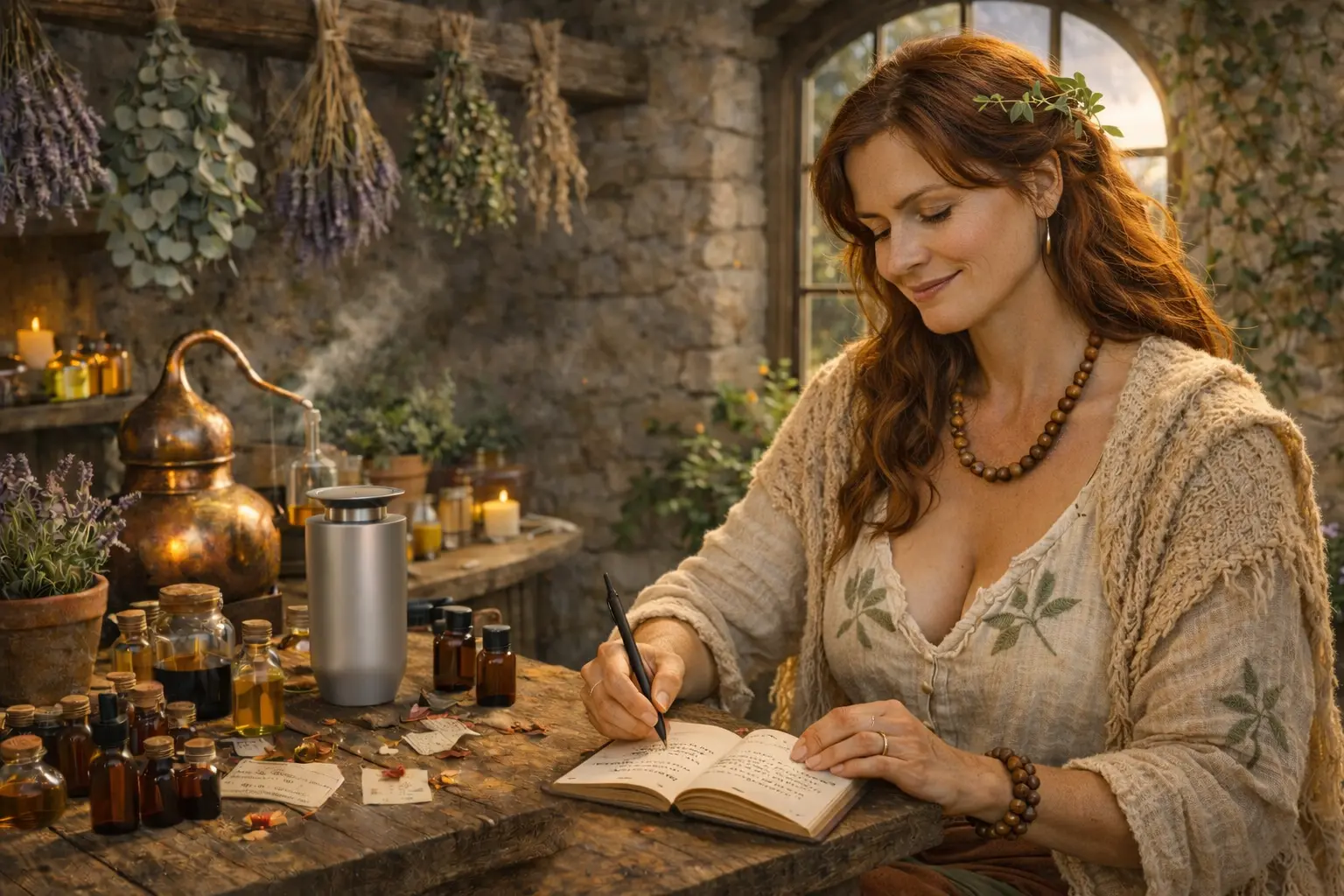
The craft of creating an aromatherapy blend balances intuition with chemistry, creative vision with technical knowledge. This process is both an art form and a discipline, not entirely unlike the work of a perfumer, a chef, or a musician composing. Understanding the phases of creation illuminates why skilled blenders command respect and why a truly well-crafted blend feels complete and purposeful rather than random.
Phase 1: Concept Design and Intention Setting
Every blend starts with an idea, an emotion, or a specific therapeutic goal. This foundational clarity is essential because it guides every decision that follows. A blender might begin with an intuition like "I want to create something that evokes the feeling of walking through a pine forest at dawn" or "I need a blend that calms my anxious thoughts during work stress." These emotional or sensory starting points act as a creative compass.
Once the concept is articulated, the blender identifies which aromatic families and oil characteristics align with that vision. For the forest-at-dawn concept, this might mean selecting fresh, green, resinous oils rather than floral ones. For an anxiety-relief blend, the choice would emphasize known calming oils with a high proportion of emotionally soothing compounds. This phase requires both knowledge of oils' individual characters and imaginative vision — the ability to envision how certain aromas might combine to create a specific mood or atmosphere.
Phase 2: Sensory Exploration and Preliminary Testing
The blender now moves into what might be called the "exploration" phase, where they smell multiple candidates, both individually and in informal combinations. This is not yet precise blending; rather, it's sensory research. A blender might uncap ten different oils and smell each one, sometimes holding two bottles near the nose to sense how they might harmonize. Some combinations create immediate synergy — the second oil seeming to enhance rather than compete with the first. Others clash; the two aromas seem to fight for attention rather than blend. Experienced blenders develop an intuition for these harmonies, but even they rely on empirical testing because chemistry is ultimately the arbiter.
This phase is playful and experimental. A blender might discover entirely unexpected combinations that work beautifully together, or conversely, find that oils they assumed would harmonize actually don't. The olfactory system is complex and sometimes unpredictable; what works in theory might smell different in practice.
Phase 3: Composition and Precise Ratios
Once a general direction emerges from the exploration phase, the blender moves toward precision. They select perhaps five to eight oils that seem promising and begin creating small test batches — typically in quantities of just 1–3 milliliters — with measured amounts of each oil.
The classic framework suggests a structure around 30% top notes, 50% heart notes, and 20% base notes. However, this is guidance rather than law. Some blends thrive with much heavier base note representation — perhaps 40% base notes for a blend meant to create a grounding evening experience. Others skew lighter, with 40% top notes for an invigorating morning blend. The art lies in understanding the guidelines well enough to know when and how to bend them for specific purposes.
Dosing is more precise during this phase. If a blend contains lavender as a heart note, the blender might decide it should represent 35% of the total. If they're including a potent oil like rose absolute, they might use just 5% because its aroma is so concentrated and impactful. These percentages are typically tracked carefully, either in a blending journal or increasingly in digital spreadsheets, because once a formula is discovered to be successful, being able to reproduce it exactly is crucial.
Phase 4: Maturation and Molecular Integration
After the blend is formulated and bottled, it enters a critical but often overlooked phase: maturation or "aging." During this period, which typically lasts anywhere from a few days to several weeks, something transformative happens at the molecular level. The individual aromatic compounds don't simply remain separate; they begin to interact. Some molecules bond with others, creating new compounds. Chemical reactions occur — not in the sense of the oil degrading, but in the sense of its molecules reorganizing into more stable, more integrated configurations.
This maturation process is comparable to the aging of wine, where raw components gradually meld into a more sophisticated, cohesive experience. A newly blended oil might smell good but feel somewhat one-dimensional, with the individual oil components still distinguishable. After a week or two of resting in a sealed bottle, that same blend often develops noticeably more depth and roundness. The individual notes integrate; the overall aroma becomes more unified and sophisticated. Some blenders swear they can perceive the exact moment when a blend "comes together" — when it transitions from being a combination of oils into being a singular, coherent composition.
Phase 5: Review, Refinement, and Approval
After maturation, the blender returns to sensory evaluation with fresh perspective. They smell the rested blend and compare it against their original intention. Does it still feel true to the concept? Has it deepened and matured as hoped? Are there elements that feel out of balance — perhaps the top notes have become too subtle, or one aromatic character is overwhelming?
At this stage, refinement often occurs. Minor adjustments might be made: a few more drops of bergamot to brighten a blend that's become too dark, or additional patchouli to ground a blend that feels too ethereal. These adjustments are typically tiny — fractions of a milliliter — because small changes can shift the entire balance. The blender might create additional test batches incorporating these modifications, then let them mature again before final evaluation. Once the blend feels truly complete, represents the intended vision faithfully, and consistently delivers the desired experience, it's approved for broader use or production.
7. Production and Quality Control
Once a blend formula is finalized and approved, moving from small test batches into production requires attention to detail, consistency, and quality assurance. The gap between crafting a beautiful 2-milliliter test blend and producing consistent 50-milliliter or larger batches is more substantial than many assume.
7.1 Homogenization and Vessel Selection
When scaling up production, the blender must ensure that the larger batch achieves complete homogeneity — that every milliliter of the finished blend contains identical proportions of each oil. This is more challenging than it might seem, particularly when blending oils of different viscosities. A heavy, sticky oil like patchouli won't naturally distribute evenly into a batch of lighter oils without active mixing. Furthermore, some oils are hydrophobic (water-repelling) while others have slightly different polarities, making complete integration take time and effort.
The vessels used for mixing matter considerably. Glass and stainless steel are industry standards because they're chemically inert — they won't react with or leach into the essential oils. Certain plastics, despite their convenience, can actually degrade when exposed to essential oils because the concentrated aromatic compounds are powerful solvents. Over time, some plastics will soften, cloud, or even begin to dissolve. Beyond the practical consideration, there's also a purity consideration: plastic can impart flavor or odor to the oils. For production intended for therapeutic or cosmetic use, glass and steel are non-negotiable.
Mixing itself requires gentle care. While the oils must be fully blended, aggressive mechanical mixing can generate heat and friction, potentially damaging delicate aromatic molecules. Many professional blenders use slow, gentle mixing at room temperature, sometimes allowing the blend to rest between intermittent mixing sessions, giving the oils time to naturally begin integrating while ensuring even distribution.
7.2 Filtration and Purification
After initial blending, many aromatherapy producers filter their blends. This step removes any microscopic plant particles, dust, or resin crystals that might have been carried over from the original oils. Filtration improves the blend's clarity and visual appearance — customers expect to see a clear, translucent liquid, not something cloudy or with visible sediment. Beyond aesthetics, filtration can improve stability; tiny particles can catalyze oxidation or other degradation processes, so removing them extends the blend's shelf life.
Filtration is typically performed using fine mesh filters or specialized glass fiber media, chosen based on the specific particle sizes to be removed. The process is gentle and performed at room temperature to avoid damaging the oils. For blends that contain heavier absolutes or resinous materials, filtration might be more challenging or might not be performed at all, as the risk of losing volatile components during the filtration process outweighs the benefit of removing trace particles.
7.3 Bottling and Packaging with Care
Essentiële oliën zijn uiterst gevoelig voor licht en zuurstof, en de keuze van verpakking is cruciaal voor het behoud van kwaliteit. Professionele aromatherapie blends worden bijna altijd verpakt in donker gekleurde glazen flesjes — meestal amberrood, kobaltblauw, of groen. Deze kleuren filteren meer dan 90% van het schadelijke UV-licht dat essentiële oliën zou kunnen degraderen. De flesjes worden traditioneel gesloten met druppelluchtdichte of aromadichte doppen, ontworpen om minimale blootstelling aan lucht mogelijk te maken bij elke opening.
Botteling vindt plaats in een schoon, drooge omgeving, ideaal bij kamertemperatuur of koeler. Het proces gebeurt voorzichtig om luchtbellen te minimaliseren — hoeveelheid zuurstof in het flesje direct na botteling kan toekomstige oxidatie beïnvloeden. Sommige producenten gebruiken inerte gasstroom (stikstof) om zuurstof uit flessen uit te verdrijven voordat ze worden gesloten — een geavanceerde stap die lange-termijn stabiliteit aanzienlijk verbetert, vooral belangrijk voor blends die maanden in distributie zullen zijn voordat ze worden gebruikt.
7.4 Labeling and Traceability Systems
Elk product krijgt een gedetailleerd label met essentiële informatie. Dit omvat de botanische (Latijnse) naam van elke olie in de blend, het land van herkomst, een uniek batchnummer voor volledige traceerbaarheid, de datum van productie en vervaldatum, de gebruiksaanbevelingen (dilutie, veiligheidsinformatie), en eventuele certificeringen zoals BIO, ECOCERT, of Fair Trade.
Dit etiketteringssysteem dient meerdere doelen. Voor de consument biedt het transparantie en vertrouwen — ze kunnen precies zien wat ze kopen en waar het vandaan komt. Voor de producent biedt het traceerbaarheid: als er ooit een probleem met een batch opdoekt, kan deze exact worden geïdentificeerd en, indien nodig, teruggeroepen. Batchnummers zijn gekoppeld aan productiegegevens, inclusief welke specifieke olieflessen in die batch zijn gebruikt, zodat zelfs tot op het niveau van individuele olieflessen kan worden nagegaan wat erin gaat.
Voor blends bedoeld voor commerciële verkoop of gebruik in professionele aromatherapie-praktijken, moeten etiketten ook voldoen aan regelgeving. De EU vereist bijvoorbeeld dat voedingsgerelateerde blends bepaalde informatie bevatten; cosmetische blends moeten voldoen aan andere richtlijnen. Duidelijke, nauwkeurige labeling is niet alleen best practice, maar meestal wettelijk vereist.
8. Safe Use of Essential Oils
Essential oils are powerful concentrations of plant chemistry — so concentrated, in fact, that one drop can require significant dilution before it's appropriate for direct skin application. Understanding safe use is fundamental for anyone creating, selling, or using blends.
8.1 Dilution Guidelines and Carrier Oils
The concept of dilution means mixing essential oils with a carrier oil — a neutral, non-aromatic oil that serves as a delivery medium while also providing its own skin benefits. Common carrier oils include jojoba oil (which most closely resembles human sebum), coconut oil (nourishing and naturally antibacterial), sweet almond oil (lightweight and soothing), grapeseed oil (non-greasy), and fractionated coconut oil (stable and long-lasting).
The appropriate dilution percentage depends on the intended use. For massage or body oils intended for regular use, a concentration of 1–3% essential oil is standard. This means that in a 100-milliliter bottle of carrier oil, you'd add 1–3 milliliters of essential oil. This range provides sufficient aroma and therapeutic benefit while remaining well within the safety range. For facial care products, where the skin is more sensitive and absorption more rapid, dilution drops to 0.5–1%. This might seem like a dramatic reduction, but the face's higher absorption rate and greater sensitivity to irritation justify the precaution. Some individuals with particularly sensitive skin prefer even lower dilutions.
Natural perfume oils occupy a different category and use higher dilution percentages, typically ranging from 10–30%. These aren't intended for direct skin contact in the same way as massage oils; rather, they're meant to be applied in small amounts — a drop or two behind the ears, on pulse points, or in the hair. The higher concentration is justified because so little is used at once.
Understanding dilution percentages is crucial for both safety and efficacy. An undiluted essential oil applied to skin is not only uncomfortable (many cause stinging or irritation) but potentially harmful, capable of causing sensitization or even chemical burns with repeated application. Conversely, an over-diluted blend might be so weak that it offers little therapeutic benefit. The target is the sweet spot: concentrated enough to be effective, diluted enough to be safe.
8.2 Skin Sensitivity, Photosensitivity, and Contraindications
Not all essential oils are equally safe for all skin types. Some oils are notorious for causing photosensitivity — an enhanced reaction to sunlight that can result in burns, pigmentation changes, or severe irritation if the skin is exposed to sun after application. The classic photosensitive oils are cold-pressed citrus oils, particularly bergamot, lime, and lemon, which contain coumarins — compounds that increase sun sensitivity. If bergamot oil is applied to the skin and that area is then exposed to direct sunlight, the result can be severe burn-like reactions or dark pigmentation patches that persist for months.
Modern cosmetic-grade bergamot is often available in bergapten-free versions, where the most problematic coumarin has been removed through processing. However, traditional cold-pressed bergamot remains photosensitive and requires either complete avoidance of sun exposure for 12–24 hours after application, or avoidance altogether if the person can't reliably protect their skin.
Beyond photosensitivity, individual sensitivities vary widely. Some people have naturally sensitive skin prone to reactions from concentrated plant compounds. Others have specific allergies — a person allergic to birch pollen, for example, might react to oils derived from related plants. The only reliable way to identify individual sensitivities is through patch testing: applying a small, diluted amount of the blend to a discrete area of skin (inside the elbow or behind the ear are common test sites) and observing over 24–48 hours for any reaction before broader use.
Certain populations require extra precautions. Pregnant and nursing women should avoid many essential oils, which can cross the placental barrier or be transmitted through breast milk. Babies and very young children have underdeveloped detoxification systems and thin, highly absorbent skin, making even diluted oils potentially problematic. Individuals taking medications should be aware that some essential oils can interact with pharmaceuticals — for example, oils high in coumarins might increase the effects of blood thinners.
8.3 Storage and Stability Over Time
Proper storage directly impacts how long a blend retains its aromatic quality, therapeutic benefit, and safety. Essential oils and their blends are volatile by nature, meaning their components gradually evaporate and degrade over time. However, the rate of degradation can be dramatically slowed through proper storage.
Oils should be kept in conditions that minimize exposure to their three main enemies: light, heat, and oxygen. The dark amber or cobalt blue glass bottles discussed in the production section exist specifically to protect against light damage. Storage should occur in a cool location — ideally between 50–70°F (10–21°C), which is why cool, dark cabinets or refrigerators are often recommended. Heat accelerates degradation; oils stored in warm kitchens or bathrooms tend to decline much faster than those kept in cool bedrooms or living rooms.
The most insidious enemy is oxidation from oxygen exposure. Every time a bottle is opened, fresh air enters, introducing oxygen that will slowly oxidize the aromatic molecules. While this is inevitable, its pace can be slowed by minimizing how often bottles are opened and by ensuring tight-fitting caps and lids. Some high-end producers use roll-on bottles with minimal headspace (air) to further reduce oxidation.
When stored properly — in dark glass, in cool conditions, with minimal air exposure — most well-formulated essential oil blends remain stable and effective for 2–3 years. Cold-pressed citrus oils degrade somewhat faster, typically remaining at peak quality for 18 months. Blends heavy in sesquiterpenes and containing absolutes tend to age beautifully, actually improving slightly as oxidation creates new aromatic complexity. The key is that properly stored blends remain viable for years, not months, contrary to the suggestion in some less-informed sources that essential oils expire quickly.
9. The Art and Science of Blending
Crafting essential oil blends is both artistic and scientific. This dual nature is what makes the field so compelling and why truly skilled blenders are valuable. While chemistry governs how molecular components interact — determining stability, scent evolution, and even therapeutic effect — intuition and creative vision guide harmony and emotional depth.
An experienced blender moves fluidly between these two modes. They might begin in "science mode," consulting the GC/MS data for various oils to understand which compounds will support their creative vision. How much pinene is in the rosemary oil? Will that pinene's sharp character complement the softer linalool in the lavender? Will the sesquiterpenes in the cedarwood create the grounding effect they're seeking? These are rational, analytical questions with measurable answers.
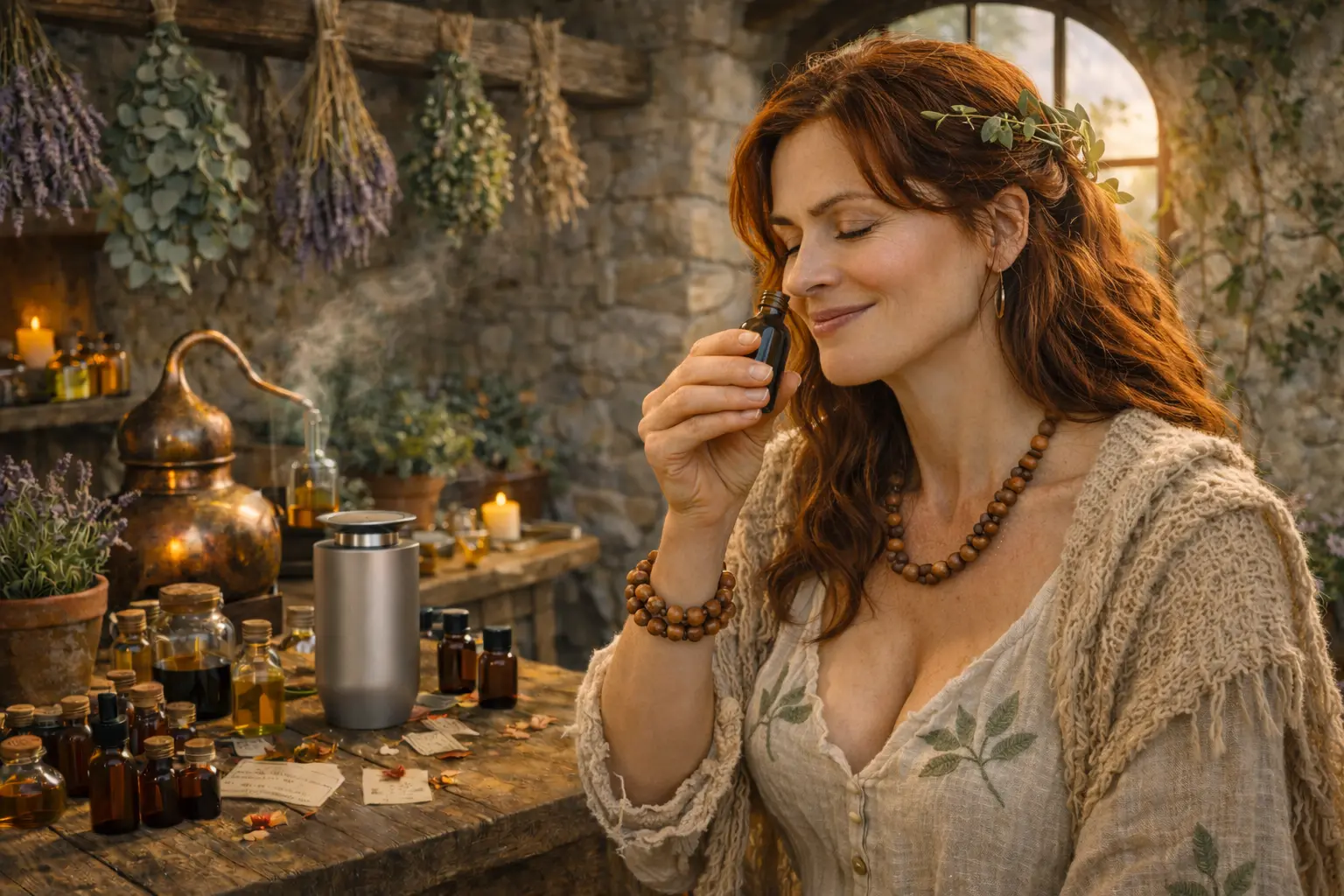
But then the blender steps into "art mode." They uncap bottles and smell, allowing their intuition and emotional response to guide them. They listen to what the oils seem to want. This isn't mysticism; it's the development of a refined olfactory sense through years of exposure to hundreds of aromatic molecules. Experienced blenders often describe it as "listening to the oils" — a metaphorical expression that nonetheless points to something real. The nose can detect differences of parts per million in air; the olfactory system is extraordinarily sensitive. When a blender says they can "feel" that a blend needs something more grounding or that a citrus oil is slightly off and has oxidized, they're often right, drawing on their developed sense.
This is why a natural oil always smells and performs differently from a synthetic version. Lavender has a particular character that moves people in ways that synthetic lavender molecules, no matter how accurately replicated, typically cannot. Patchouli seems to have a grounding, centering quality that goes beyond its chemical composition. Rose carries emotional resonances that most analytical explanations fall short of fully capturing.
Experienced blenders learn that certain oils have particular personalities. Lavender is gentle and soothing; lemon is uplifting and clarifying; patchouli is grounding and meditative; frankincense is spiritually evocative and calming. Together, these "personalities" compose an aromatic symphony. The blender's role is akin to a conductor, understanding each instrument's character and bringing them together into harmonious whole that's greater than the sum of its parts.
10. Sustainability and Ethical Sourcing
With demand for natural products rising dramatically over recent decades, sustainability has transformed from a niche concern into a central question for conscientious producers and consumers. The ecological footprint of essential oil production is non-trivial. Producing one kilogram of essential oil can require anywhere from 30 to 400 kilograms of plant material, depending on the oil's concentration and which plant is being used. Rose oil production, for instance, requires approximately 60 rose flowers per drop — an enormous requirement when multiplied across global demand.
This scaling challenge creates both environmental risks and opportunities. On the risk side, unchecked demand for popular oils like sandalwood, rosewood, and oud has threatened wild populations and created perverse incentives for over-harvesting that damages ecosystems. Some oils have been cultivated into near-extinction, and certain forests have been cleared to make room for monoculture cultivation of oil-bearing plants. These ecological costs are real and sometimes irreversible.
Simultaneously, sustainable practices offer solutions. Well-managed organic cultivation avoids synthetic pesticides and fertilizers, protecting soil health, water purity, and the broader ecosystem. When producers adopt Fair Trade partnerships, they ensure that the farmers and harvesters who do the essential work receive equitable payment, creating economic incentives for careful stewardship rather than exploitative extraction. Sustainable harvesting protocols for wild plants ensure that only a portion of any wild population is harvested, allowing regeneration and maintaining genetic diversity.
Transparent sourcing has become increasingly feasible through modern traceability systems. A conscientious producer can now provide complete information: Which farm did this lavender come from? What were the growing conditions? When was it harvested? Which batch of oil was produced? This transparency allows consumers to feel confident that their purchase supports responsible practices. Some premium brands now publish detailed information about every supplier, sometimes including photos and stories of the actual people who grew and harvested the plants in their oils.
The cost implications are significant. A sustainably-sourced, traceable, ethically-produced essential oil costs considerably more than one sourced from whoever offers the best wholesale price. For a blender creating commercial products, this choice affects margins and pricing. Yet an increasing number of conscious consumers are willing to pay more for products aligned with their values regarding sustainability and ethics. A brand that clearly communicates its commitment to ethical sourcing often builds stronger customer loyalty and can command premium pricing that justifies the higher input costs.
11. From Formula to Brand
Turning a carefully crafted blend into a marketable product involves far more than just fragrance and quality. It requires navigating regulatory frameworks, developing compelling branding, and creating trust in a marketplace sometimes clouded by misinformation and inferior products.
11.1 Regulatory Framework and Compliance
The regulatory landscape for essential oils and aromatherapy products varies significantly by region, but most jurisdictions have become more stringent in recent years. In the European Union, cosmetic products containing essential oils must comply with Regulation (EC) 1223/2009, often referred to as the Cosmetics Regulation. This comprehensive framework requires that any product intended to affect the skin or hair (which includes aromatic cosmetics) undergo a formal Cosmetic Product Safety Report (CPSR), conducted by a qualified chemist or toxicologist.
This safety assessment evaluates the product's composition, concentration levels of potentially sensitizing ingredients, stability data (showing that the product doesn't degrade in problematic ways during storage), and potential dermal irritation or toxicity. The assessment might identify certain oils as unsuitable at particular concentrations or for certain populations (such as pregnant women or young children). The resulting report must be maintained by the company and made available to regulatory authorities upon request.
Non-cosmetic blends — such as those intended purely for diffusion or room fragrance — fall under different regulations. In the EU, these typically fall under the CLP Regulation (Classification, Labelling and Packaging), which requires that products containing substances classified as hazardous display appropriate warning symbols and precautionary statements. An oil very high in phenol content, for instance, might be classified as corrosive and require hazard labeling and specific handling instructions.
These regulatory requirements add cost and complexity to commercial production. Yet they exist for good reason: they ensure that products on the market have been evaluated for safety and that consumers receive accurate information about what they're purchasing. A legitimate company sourcing oils from reputable suppliers and following proper formulation and testing protocols typically finds compliance manageable; it's those cutting corners or making unsupported health claims who face regulatory trouble.
11.2 Branding, Marketing, and Emotional Positioning
Beyond regulatory compliance, successful aromatherapy brands succeed through compelling storytelling and emotional positioning. The market for natural products is crowded, with many blends that are chemically sound and properly made. What differentiates a successful brand is often not the blend itself, but the story and values surrounding it.
Strong aromatic brands typically build narratives around authenticity and transparency. They explain where plants come from, how they're grown, by whom, and why it matters. They tell the story of plant to bottle, often with photographs of actual fields, distilleries, or artisans involved. This transparency counteracts the skepticism many consumers feel toward natural products — a healthy skepticism, given how much misinformation circulates in the wellness industry.
Minimalist design and eco-friendly packaging have become hallmarks of premium brands. Rather than competitive, brightly-colored packaging that screams for attention, many successful brands employ elegant simplicity — beautiful but understated bottles, recyclable or compostable packaging, and clean typography. This aesthetic signals quality, thoughtfulness, and environmental consciousness — values that resonate with the demographic most likely to purchase premium natural products.
Clear, honest education about use and benefits distinguishes trustworthy brands from those making exaggerated claims. A responsible brand clearly states that aromatherapy supports wellbeing and can complement medical treatment, but doesn't claim that a blend can cure disease or replace medical care. They provide usage guidance, including dilution rates, safety precautions, and contraindications for special populations.
Emotional branding is another lever. Successful brands associate their blends with feelings or states beyond the literal fragrance — "Focus Blend" for mental clarity during work, "Calm Essence" for evening relaxation, "Courage Oil" for facing challenges. These emotional associations, when backed by thoughtfully selected oils and honest marketing, create deeper connection with consumers than functional descriptions alone would achieve.
11.3 Consumer Testing and Market Validation
Before launching a blend commercially, responsible producers typically test it with target consumers. This testing can range from informal feedback from friends and colleagues to formal consumer panels of 30–100 people selected to match the target demographic.
Consumer testers evaluate multiple dimensions beyond simple "do you like it?" They assess scent intensity (is it too subtle, just right, or overwhelming?), longevity (how long does it smell pleasant when diffused or applied?), emotional effect (does it actually make you feel what the brand claims?), value perception (does the quality justify the price?), and whether they'd purchase it again.
This feedback loop often leads to refinement. A panel might report that a blend smells beautiful but fades too quickly, prompting the blender to add more base notes. Or feedback might reveal that while the blend is lovely, the intended emotional benefit isn't clearly communicated in the marketing, requiring adjustment to the brand narrative rather than the blend itself. This iteration between chemistry, consumer feedback, and branding ultimately produces products more likely to succeed commercially because they're genuinely aligned with what their target market wants.
12. Innovation in the Aroma Industry
The world of natural aroma creation continues to evolve, driven by advances in technology, growing consumer demand for sustainable practices, and deepening scientific understanding of aromatic compounds and their effects.
CO₂ extraction represents perhaps the most significant technological advancement in essential oil production in recent decades. Unlike steam distillation, which uses heat and moisture, CO₂ extraction works by pressurizing carbon dioxide to a state between liquid and gas (called a "supercritical" state), which makes it an excellent solvent for aromatic compounds while remaining benign and leaving no toxic residue. The process is performed at much lower temperatures than distillation, theoretically preserving more delicate, heat-sensitive compounds.
The resulting oils from CO₂ extraction often display remarkable intensity and complexity of aroma. A CO₂ extract of German chamomile, for instance, contains compounds like azulene that are largely lost in traditional steam distillation, resulting in an aroma that's deeper, richer, and more therapeutically potent than the distilled version. However, CO₂ extracts are also more expensive to produce, require specialized equipment, and aren't suitable for all plants, so they occupy a premium niche rather than replacing traditional methods.
AI-assisted blending tools are emerging, using machine learning trained on thousands of successful fragrance and aroma blends to suggest harmonious combinations. These tools aren't substitutes for human creativity — they can't replace the intuition and vision of an experienced blender — but they can be powerful brainstorming aids. An AI system might suggest unexpected combinations that, when tested, turn out to work beautifully, expanding the creative possibilities beyond what a blender might intuitively combine.
Micro-encapsulation technology encapsulates tiny droplets of essential oil inside protective polymer shells. These microcapsules remain stable in cosmetic products, textiles, or other applications without the oil evaporating or degrading as quickly as freely dispersed oil would. They can even be designed to rupture release their aromatic payload in response to pressure, water, or temperature, allowing applications like scent-releasing textiles or long-lasting cosmetics.
These innovations reflect a broader trend: the increasing application of sophisticated technology to support and enhance traditional aromatic arts. Modern technology now stands alongside centuries-old wisdom and craftsmanship, not replacing the latter but amplifying its possibilities.
13. DIY Tips for Making Your Own Blends
For those interested in creating their own essential oil blends at home, the process is accessible and requires minimal equipment, though understanding a few principles significantly increases success rates.
Start with small quantities. Create test batches of just 1–2 milliliters initially. This allows you to experiment without financial waste or risk of larger mistakes. A 1-milliliter test batch costs just pennies' worth of essential oil, making it practical to try numerous variations. A simple approach uses dropper bottles: if you're testing a ratio of lavender, bergamot, and sandalwood, you might add 3 drops of lavender, 2 drops of bergamot, and 1 drop of sandalwood to a 1-milliliter dropper bottle, shake well, let it mature for several days, and evaluate.
Use pipettes or dropper bottles for accurate measurement. Not all droppers deliver the same drop size, but consistency within a single testing session matters more than absolute precision. If you establish that a blend uses "3 drops lavender + 2 drops bergamot," you can scale this to larger batches by maintaining the same ratio. Three drops equals roughly 0.15 milliliters, so for a 15-milliliter batch, you'd use 1.5 milliliters of lavender and 1 milliliter of bergamot.
Keep meticulous notes of every formula you create. Record the oils used, exact amounts (either in drops or milliliters), the date created, initial assessment, and notes after several days of maturation. Over time, this records becomes a personal resource — a collection of successful blends you can recreate or modify. Many experienced home blenders maintain detailed journals spanning decades, each entry a stored memory and recipe.
Source pure, verified oils from reputable suppliers. This is worth stating emphatically: the quality of your finished blend depends entirely on the quality of your starting materials. A beautiful blending technique can't compensate for inferior oils. Seek suppliers who provide GC/MS data, clear botanical information, and sourcing details. Yes, these oils cost more than suspiciously cheap options, but the difference in results justifies the cost.
Take your time and trust the process. Blending is not a race. Smell your test batches daily for the first week, then weekly thereafter. Notice how the blend evolves. Many blenders find that a blend they found merely "okay" on day one becomes genuinely beautiful by day seven, once maturation has occurred. This patience is rewarded with better blends and deepening understanding of how aromas evolve over time.

14. The Magic of Scent: What a Blend Can Do
A well-crafted essential oil blend can transform mood, atmosphere, and even physiological state. While aromatherapy is not medicine and aromatics shouldn't replace medical care, the research increasingly validates what traditional cultures have long known: scent profoundly influences our experience.
Scent directly stimulates the olfactory bulb — the specialized brain structure dedicated to smell — which has direct neural connections to the limbic system, the brain's emotional center. Unlike other senses, which are first processed through the thalamus (a sorting station that filters and categorizes sensory information), smell goes directly to emotion and memory centers. This is why a particular scent can instantly evoke a memory or shift mood in ways that seeing a photograph or hearing a song often doesn't.
Research shows that certain aromas measurably affect physiology. Lavender, rich in linalool and linalyl acetate, has been shown in multiple studies to reduce cortisol levels (a stress hormone), lower heart rate, and improve sleep quality. Lemon and other citrus aromas enhance alertness and cognitive function. Frankincense appears to modulate stress responses and promote meditative states. While these aren't cure-all effects — aromatherapy works subtly, supporting rather than replacing other health practices — the research base is solid enough that their use in therapeutic contexts is well-justified.
Each drop of a well-crafted blend tells a story. The bergamot came from Italian or Turkish groves where the fruit hung heavy on fragrant trees. The lavender grew in Provençal fields, gathered by hands that have worked those same fields for generations. The sandalwood was sustainably harvested from Indian forests, supporting local communities. The patchouli journeyed from Indonesian plantations where soil-building practices restore land that once was depleted. When you smell that blend, you're smelling the distilled essence of all those places, that care, that time.
15. The Art of Attention
The creation process of essential oil blends is, above all, an exercise in mindfulness — a collaboration with nature that demands and rewards full attention. It requires knowledge, certainly, but beyond technical knowledge, it asks for care, respect, and deep presence.
Every decision matters. Which oil to source, from which producer, grown under which conditions. How to extract without damaging. How to combine in ways that create wholeness rather than just mixture. How to store so the creation remains vital. How to share it with the world responsibly.
The relationship between creator and material is symbiotic. The blender learns from the oils as much as they shape them. Over months and years of blending, your sense of smell refines. Your intuition for harmonies develops. Your respect for nature's gifts deepens. What began as a technical pursuit — "I want to learn how to make blends" — often evolves into something more akin to meditation or artistry.
The blender's work is humble in the truest sense. You're not creating anything new; you're recognizing the inherent beauty in what the earth provides and revealing it through thoughtful combination. You're a conduit, an arranger, a listener. You attend to the materials' wants and the user's needs and find the meeting place between them.
In this way, every small bottle becomes a living expression of art and nature, infused with intention, care, and the harmony that emerges when attention is fully present. That's the deepest magic of essential oil blending — not that it smells beautiful or makes you feel better, though it does both. The real magic is that through this simple act of carefully combining fragrances, we develop a more conscious, appreciative relationship with the natural world and with each other. 🌿